
No products in the cart.
USE CODE: SPINNERBELT

introduction:
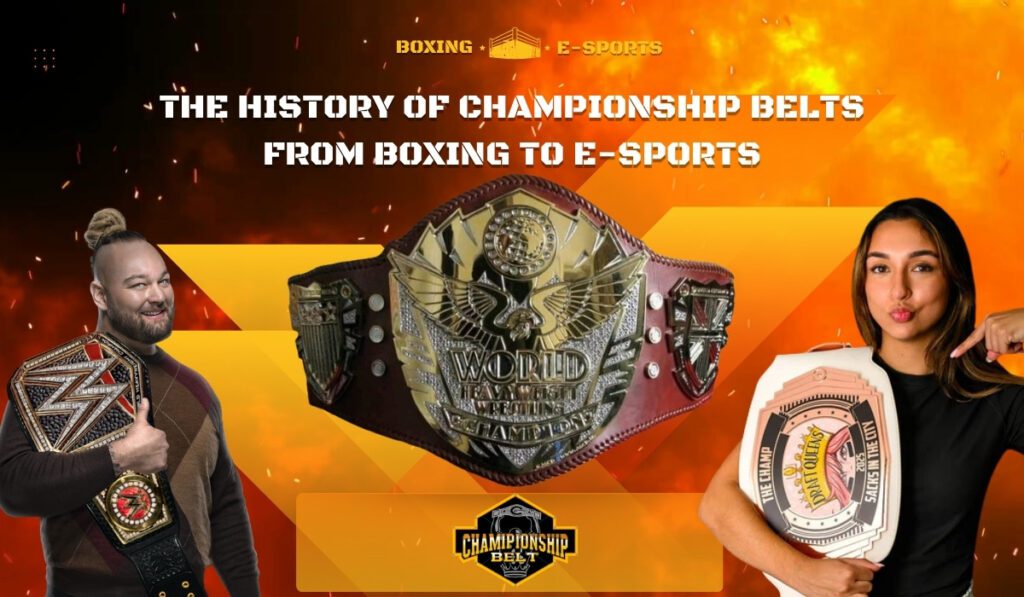
Championship Belts are more than just shiny accessories—they are powerful symbols of victory, prestige, and legacy. From the smoky boxing arenas of the 19th century to today’s digital battlegrounds of esports, belts have remained a constant reminder of what it means to be a champion. Championship Belts evolution tells a fascinating story about how sports—and even culture itself—have changed over time.
At Championship Belts, we celebrate not only the craftsmanship behind these belts but also the traditions and stories that make them so special. Let’s take a journey through the history of Championship Belts, from their earliest days in boxing to their surprising role in today’s esports world.
The Birth of the Championship Belt in Boxing
The championship belt as we know it first appeared in the mid-19th century in boxing. Before then, fighters were often awarded trophies, medals, or even symbolic items like ornamental cups. But in 1810, the first documented boxing Championship Belts was awarded to English bare-knuckle fighter Tom Cribb after defeating Tom Molineaux.
This Championship Belts was made of black leather and adorned with decorative gold plates—setting the standard for future belts. Unlike a trophy that sits on a shelf, a belt could be worn by the champion, symbolizing that they carried their title with them. It was practical, visible, and instantly recognizable.
As professional boxing grew in popularity through the late 1800s and early 1900s, belts became the ultimate prize. They weren’t just awards—they were physical embodiments of dominance and pride. Promoters quickly realized the spectacle of presenting a belt, and the tradition became inseparable from the sport.
The Golden Era: Boxing’s Iconic Belts
By the 20th century, boxing organizations like the WBA, WBC, IBF, and WBO had established their own unique championship belts. Each belt carried its own style, often decorated with national flags, emblems, and golden detailing.
Legends such as Muhammad Ali, Mike Tyson, and Floyd Mayweather Jr. made these belts world-famous, holding them aloft after historic fights. For fans, the belts became as recognizable as the fighters themselves. They weren’t just accessories—they were part of boxing’s identity.
The phrase “holding the belt” became synonymous with being the best. To this day, the image of a boxer draped in multiple belts is one of the most iconic sights in sports.
Wrestling Brings the Belt to Entertainment
While boxing belts were tied to strict rules and governing bodies, professional wrestling introduced belts into the world of entertainment. Starting in the early 20th century, wrestlers began competing for titles represented by championship belts.
Unlike boxing, where belts symbolized sanctioned victories, wrestling used belts as storytelling devices. They represented power, rivalries, and drama. The WWWF (later WWE) and other wrestling promotions popularized extravagant, oversized belts with bold designs. These belts became just as famous as the performers who wore them.
Wrestling’s use of belts also made them part of pop culture. Even kids who never watched a full match recognized the iconic gold and leather strapped across a wrestler’s waist.
Mixed Martial Arts (MMA) and Modern Combat Sports
With the rise of MMA in the 1990s, championship belts found a new home. The UFC (Ultimate Fighting Championship) introduced its first belt in 1993, and since then, belts have become the pinnacle of achievement in the sport.
Unlike wrestling, MMA belts represent real, hard-fought victories inside the cage. Today’s UFC belts are designed with intricate detail, combining tradition with modern flair. They symbolize grit, skill, and the global appeal of martial arts.
Other combat sports organizations, such as Bellator and ONE Championship, also use belts to crown their champions. Each design reflects the brand identity of the organization while continuing the legacy of belts as symbols of dominance.
Beyond the Ring: Belts in Everyday Life
As belts became ingrained in combat sports, they also began appearing outside of them. Custom championship belts became popular for corporate events, birthdays, weddings, and celebrations. Instead of handing out trophies, event organizers began using belts as fun, memorable prizes.
This trend showed that belts weren’t limited to professional athletes—they could be for anyone. A custom belt turned ordinary events into something exciting, making people feel like champions in their own right.
The Digital Era: Championship Belts in Esports
Perhaps the most surprising chapter in the history of championship belts is their rise in esports. As competitive gaming exploded in the 2000s and 2010s, organizers began looking for new, exciting ways to reward players. While cash prizes and trophies were standard, belts added an element of spectacle.
Esports culture is built on showmanship, rivalries, and unforgettable moments—just like combat sports. A championship belt fits perfectly into that narrative.
Today, you can see custom esports belts awarded at LAN parties, online tournaments, and even professional-level competitions. Whether it’s a League of Legends championship, a Street Fighter showdown, or a Call of Duty battle, belts have become an iconic way to crown champions in the digital arena.
For gamers, belts are not just prizes—they’re wearable bragging rights. They create hype on live streams, look incredible in photos, and add to the spectacle that esports fans love.
Why Belts Endure as Symbols of Victory
What makes belts so enduring across centuries and different sports? The answer lies in their visibility, symbolism, and versatility. Unlike a trophy, a belt isn’t tucked away—it’s displayed proudly on the champion. It represents power, achievement, and prestige in a way that people immediately understand.
Whether in boxing, wrestling, MMA, or esports, belts transcend the competition itself. They are timeless symbols that adapt to any sport or event while still carrying the same core message: you are the champion.
Conclusion
From Tom Cribb’s first boxing belt in 1810 to today’s custom esports belts, championship belts have come a long way. They’ve evolved from practical awards in combat sports to cultural icons embraced by wrestling, MMA, and now gaming. Their ability to adapt to new arenas while maintaining their status as the ultimate symbol of victory ensures that belts will continue to play a central role in sports and entertainment for years to come.
At ChampionshipBelt.co.uk, we’re proud to carry on this tradition by crafting belts that honor both the past and the present. Whether you’re a fighter, a gamer, or someone celebrating a special milestone, a championship belt is the perfect way to mark your victory in style.
Frequently Asked Questions
Q1: Who received the first-ever championship belt in history?
The first documented boxing belt was awarded to Tom Cribb in 1810 after defeating Tom Molineaux.
Q2: Are championship belts still used in traditional sports like boxing?
Yes, belts remain the top prize in boxing, MMA, and wrestling, as well as being adapted into other industries.
Q3: How did wrestling change the use of championship belts?
Wrestling popularized belts as entertainment props and storytelling devices, making them larger-than-life icons.
Q4: Why are belts becoming popular in esports?
Belts add drama, spectacle, and a sense of identity to esports events, making victories more memorable for players and fans alike.
Q5: Can anyone order a custom championship belt?
Absolutely! At ChampionshipBelt.co.uk, we create belts for sports, events, celebrations, and even personal milestones.
Share Now:
Recent Posts
Daniel Bryan Net Worth, Wife, Career & Biography
March 5, 2026
8:29 am
Custom Championship Belts – Design, Price & How to Buy
March 4, 2026
11:09 am
Hulk Hogan Net Worth 2026: Career Earnings & Assets
March 3, 2026
8:27 am
WWE IC Championship Belt: Top Twenty Champions & History
February 24, 2026
7:12 pm

Economy Championship Belts
February 10, 2026
5:50 am
