No products in the cart.


USE CODE: SPINNERBELT

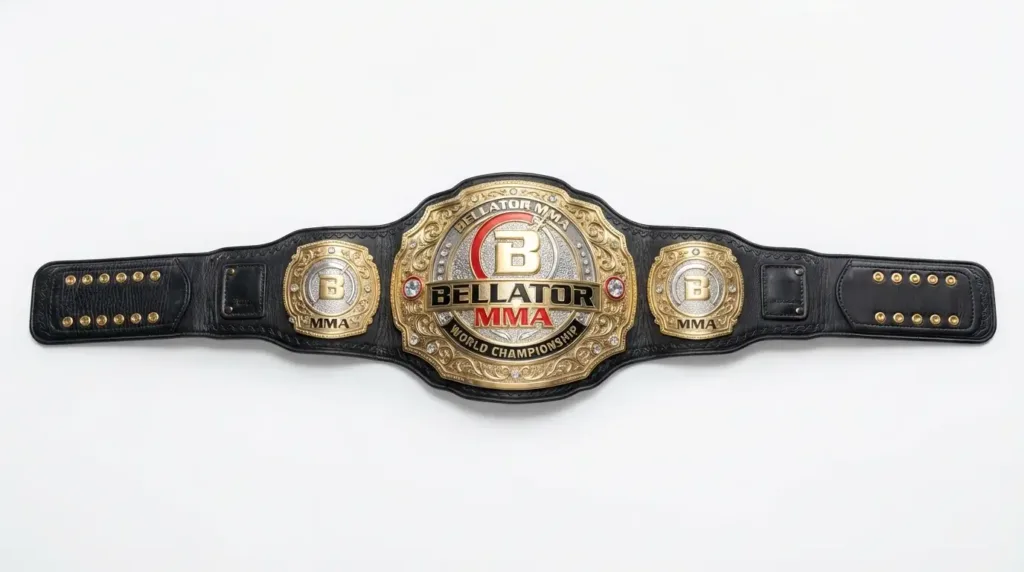
The Bellator Championship belt built a reputation as one of MMA’s most distinctive titles, known for its bold, heavy-duty design and a roster of dominant champions, before an industry-changing merger ultimately brought its story to a close.
This guide covers the complete history of the Bellator Championship belt, its design, and how it evolved through Bellator’s acquisition by the Professional Fighters League.
The Bellator Championship belt represented the top prize across each weight division in Bellator MMA, one of the largest mixed martial arts promotions in North America alongside the UFC. Rather than following a traditional challenger system exclusively, Bellator built much of its early championship history around tournament formats, crowning champions through elimination brackets before shifting toward more standard title defenses in later years.
The Bellator Heavyweight Championship, one of the promotion’s first titles, was established in 2010 through Bellator’s Season 4 tournament. Cole Konrad became the inaugural champion, defeating Brock Jenkins via doctor stoppage in the tournament final. This tournament-based approach to crowning champions became a defining feature of Bellator’s early identity, setting it apart from the UFC’s more traditional ranking and title-shot system at the time.
Bellator’s championship belts developed their own distinct visual identity rather than mimicking the UFC’s design language. The belts were known for their bold, heavy-duty center plates and imposing overall presentation, giving them a weighty, aggressive look that matched the promotion’s competitive intensity. This design philosophy helped Bellator’s titles stand out on their own merits within the increasingly crowded MMA promotional landscape.
In November 2023, the Professional Fighters League (PFL) acquired Bellator MMA in one of the biggest business moves in recent MMA history. The two promotions staged their first cross-promotional event, “PFL vs. Bellator: Champions,” on February 24, 2024, in Riyadh, Saudi Arabia, featuring head-to-head matchups between reigning PFL and Bellator champions across four weight classes. The event’s marquee matchup pitted Bellator heavyweight champion Ryan Bader against PFL heavyweight champion Renan Ferreira, while other bouts saw Bellator’s Johnny Eblen face PFL’s Impa Kasanganay and Bellator’s Patricio “Pitbull” Freire take on PFL’s Gabriel Braga.
Adding star power to the historic crossover event, boxing legend Mike Tyson was brought in to personally present the winners of each champion-vs-champion matchup with a specially created “Champion of Champions” title belt. This unique belt included a notable innovation: a removable ring built into the design, allowing winning fighters to wear a piece of their victory the same way athletes in other major sports receive championship rings. The concept, credited to PFL leadership and former UFC champion Francis Ngannou, aimed to give fighters a similar keepsake tradition to what’s common in sports like football and baseball.
Following the 2024 crossover event, Bellator’s existing championships were initially retained and defended under the newly created PFL Champions Series banner. The final Bellator-branded event took place on January 25, 2025, in Dubai, marking the effective end of standalone Bellator programming. Throughout 2025, the PFL introduced updated title belt designs to represent its now-unified championship structure, with fighters like Johnny Eblen transitioning through multiple belt designs as the promotion finalized its new visual identity, eventually retiring the original Bellator belts entirely.
With the Bellator-PFL integration now complete, championship belts across the unified promotion are recognized under the PFL banner. As of late 2025, titleholders included Vadim Nemkov at heavyweight, Corey Anderson at light heavyweight, Costello van Steenis at middleweight, Usman Nurmagomedov at lightweight, and Cris Cyborg in the women’s featherweight division, several of whom transitioned directly from Bellator gold to their new PFL championships during the merger process.
Explore our full MMA Championship Belts collection for authentic-style replicas inspired by Bellator’s bold, heavy-duty design tradition, alongside titles from the UFC and other major promotions. For a broader look at how MMA belts evolved across every organization, check out our complete history of MMA Championship belts.
The first Bellator Championship, the Heavyweight title, was established in 2010 through the promotion’s Season 4 tournament, with Cole Konrad becoming the inaugural champion.
Bellator’s belts were known for bold, heavy-duty center plates and an imposing overall presentation, built to establish a visual identity distinct from the UFC’s championship designs.
Following PFL’s 2023 acquisition of Bellator, the titles were initially defended under the PFL Champions Series banner before being fully replaced by new PFL championship belts throughout 2025.
Mike Tyson presented a specially created “Champion of Champions” belt to the winners of head-to-head PFL vs. Bellator matchups, notably featuring a removable ring fighters could wear separately.
The Bellator Championship belt carved out a genuinely distinct identity in MMA, from its tournament-based origins in 2010 to its bold, heavy-duty design tradition that set it apart from the UFC. While the 2023 PFL acquisition and subsequent 2024-2025 integration ultimately brought the Bellator name to a close, its championship legacy lives on through the fighters, like Johnny Eblen, Corey Anderson, and Patricio Pitbull, who carried that gold directly into the unified PFL era.



 Optimized by Seraphinite Accelerator