No products in the cart.


USE CODE: SPINNERBELT

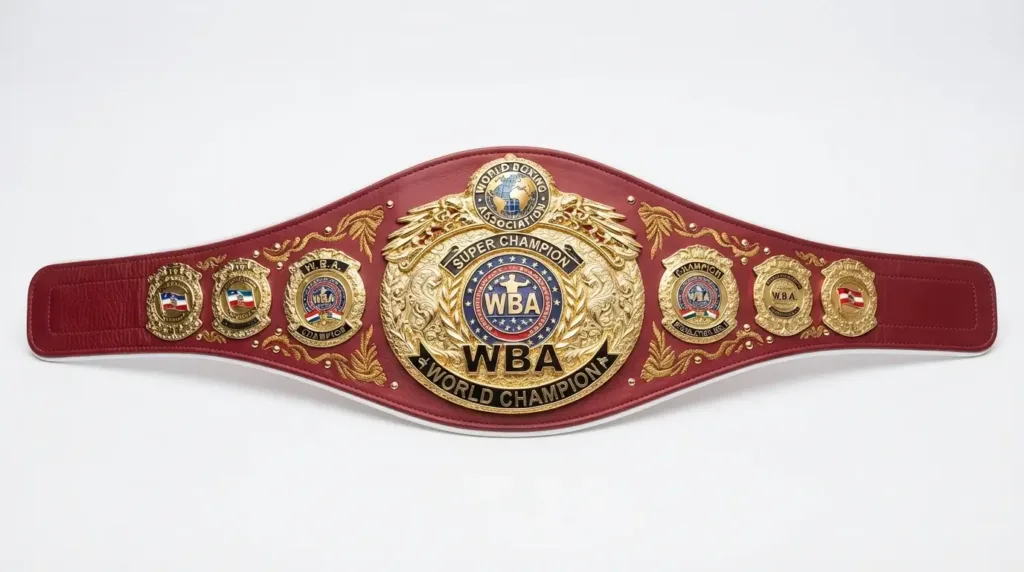
The WBA Championship belt represents boxing’s oldest sanctioning tradition, but it also comes with one of the most confusing championship structures in all of combat sports.
This guide covers the complete history of the WBA Championship belt, its design, and breaks down exactly how its multiple champion tiers work, a system that’s sparked plenty of debate among boxing fans over the years.
The WBA Championship belt is the title awarded by the World Boxing Association, the oldest of boxing’s four major sanctioning bodies, alongside the WBC, IBF, and WBO. Unlike some of its rivals, the WBA is known for recognizing multiple simultaneous champions within a single weight division, a structure that has made its championship belt one of the most debated in the sport.
The World Boxing Association traces its roots back to 1921, when it was founded as the National Boxing Association (NBA). The organization officially rebranded as the World Boxing Association in 1962, reflecting its growing international scope. As boxing’s oldest major sanctioning body, the WBA sanctioned some of the sport’s earliest recognized world title fights, and its championship belt has since been carried by legends including Joe Louis and Sugar Ray Robinson.
The modern WBA Championship belt typically features a gold-plated centerpiece prominently displaying the organization’s globe logo, paired with a blue leather strap, giving it a distinct look compared to the WBC’s well-known green design. Over the decades, the WBA’s belt design has gone through various changes reflecting different eras of the sport, but the combination of gold detailing and a colored strap featuring the organization’s emblem has remained a consistent visual identity.
Unlike most sanctioning bodies, the WBA doesn’t recognize just one champion per weight class. Instead, it operates a multi-tiered system that can result in three or four different “WBA champions” existing in the same division at once.
This is the WBA’s standard, entry-level titleholder in a given weight class, crowned through the organization’s normal championship process.
Introduced in 2001, the Super Champion tier is awarded to a Regular Champion who also captures a championship recognized by the WBC, IBF, or WBO, effectively becoming a unified titleholder. When this happens, a new Regular Champion is crowned separately from the contender pool, creating two simultaneous WBA champions in that division.
An Interim Champion is a temporary titleholder crowned when the reigning champion is unable to defend their belt for an extended period, often due to injury, legal issues, or scheduling conflicts.
The Gold Champion represents a further, less clearly defined tier within the WBA’s structure, without consistently established rules for exactly how or when it’s awarded, adding yet another layer of complexity to the organization’s championship picture.
This multi-tiered structure has drawn significant criticism from hardcore boxing fans and commentators, who argue it dilutes the meaning of being a “WBA champion” when multiple titleholders can exist in the same division simultaneously. Despite the criticism, the WBA remains globally recognized, particularly influential in Latin America and Asia, and its championship belt continues to carry genuine prestige for many fighters, even amid the ongoing debate over its structure.
Throughout its long history, the WBA Championship belt has been held by some of boxing’s most celebrated fighters. Joe Louis and Sugar Ray Robinson helped establish the title’s early prestige, while more recent legends, including Muhammad Ali and Floyd Mayweather, have also carried WBA gold at various points in their careers, cementing the organization’s place among boxing’s most historically significant sanctioning bodies.
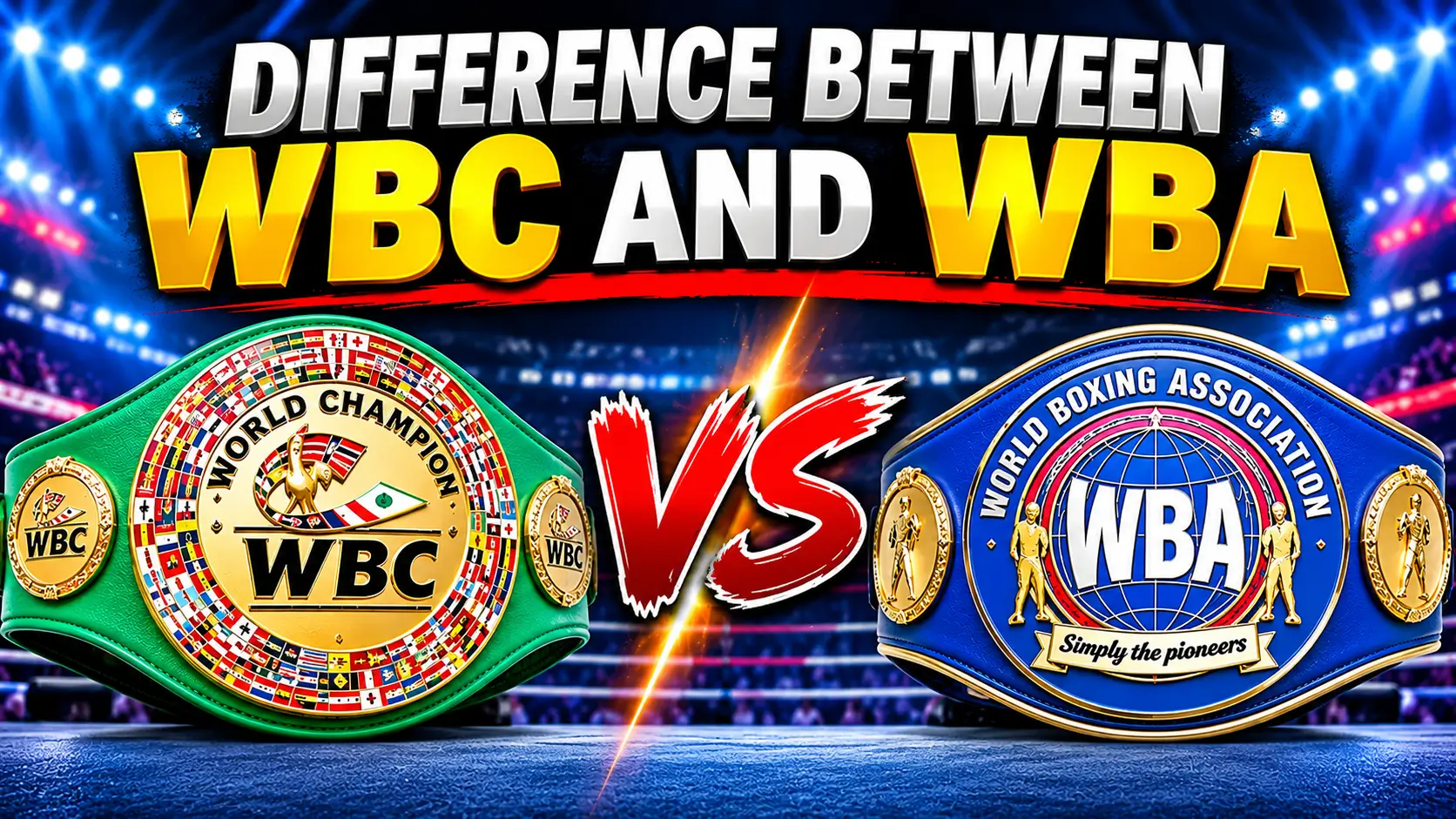
The WBA and WBC are often compared, given their status as boxing’s two oldest major sanctioning bodies. If you’d like a deeper breakdown of how the WBC’s own history, design, and single-champion structure compares to the WBA’s more complex system, our complete history of WBC Championship belts covers that title in full detail.
Explore our full collection of authentic-style boxing championship belts inspired by the sport’s most iconic sanctioning bodies, including designs celebrating the WBA’s long history and its many legendary champions.
The WBA traces its origins to 1921, when it was founded as the National Boxing Association, before officially rebranding as the World Boxing Association in 1962.
The modern WBA belt typically features a gold-plated centerpiece with the organization’s globe logo, paired with a blue leather strap.
The WBA uses a multi-tiered system, including Regular, Super, Interim, and Gold champions, which can result in three or four titleholders existing simultaneously in a single division.
A Super Champion is a titleholder who, as the WBA’s Regular Champion, also captures a championship recognized by the WBC, IBF, or WBO, becoming a unified champion.
The WBA recognizes multiple simultaneous champions per weight class through its tiered system, while the WBC generally maintains a single-champion policy, giving it a more straightforward title structure.
The WBA Championship belt represents more than a century of boxing tradition, tracing back to its founding as the National Boxing Association in 1921. While its complex, multi-tiered champion system, spanning Regular, Super, Interim, and Gold titleholders, has made it one of the more controversial structures in the sport, the WBA’s belt remains a globally recognized symbol of boxing excellence, carried by some of the greatest fighters the sport has ever seen.




 Optimized by Seraphinite Accelerator