No products in the cart.


USE CODE: SPINNERBELT

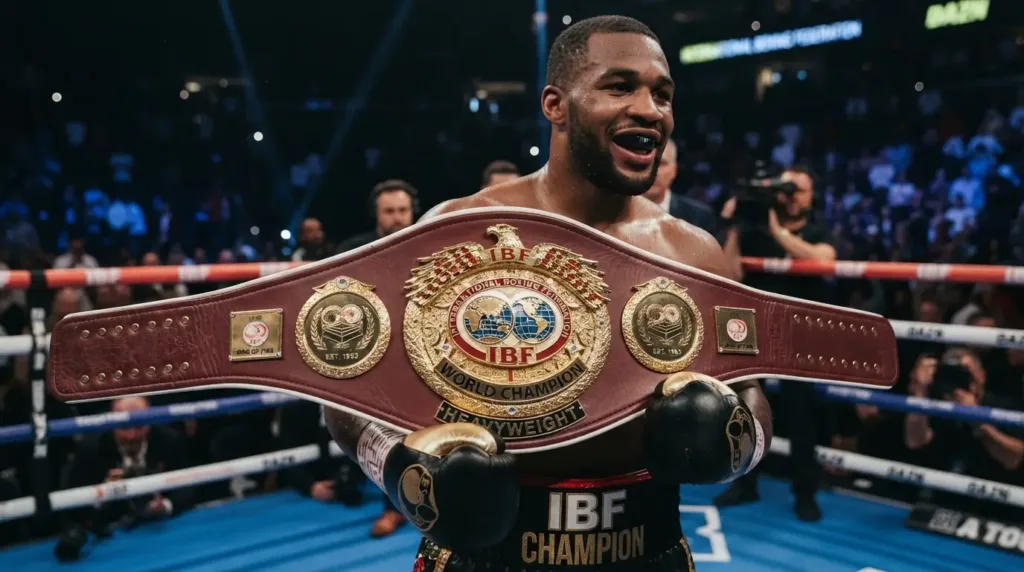
The IBF Championship belt represents one of boxing’s most respected titles, built on a reputation for stricter rules and more transparent rankings than its rival sanctioning bodies.
This guide covers the complete history of the IBF Championship belt, its design evolution, and exactly what makes its championship philosophy different from the WBC, WBA, and WBO.
The IBF Championship belt is awarded by the International Boxing Federation, one of boxing’s four major sanctioning bodies alongside the WBC, WBA, and WBO. Known throughout the sport for its strict mandatory defense requirements and performance-based ranking system, the IBF has built a reputation as the sanctioning body where, as many boxing insiders put it, if you hold the belt, you earned it in the ring.
The International Boxing Federation was founded in 1977, originally starting as a regional sanctioning body working alongside the United States Boxing Association before gaining major international recognition in 1983. That same year marked a pivotal moment in the organization’s history, one directly tied to internal politics within a rival sanctioning body.
The belt’s origin story is rooted in frustration and ambition. In 1983, a group of officials who had failed to win the presidency of the World Boxing Association broke away entirely, unhappy with what they viewed as the WBA’s political culture. Their goal was to build a new organization with stricter, more transparent ranking rules and genuine mandatory challenger requirements, a founding philosophy that continues to define the IBF’s reputation today as the strictest of boxing’s major sanctioning bodies.
The original IBF Championship belt debuted with a simple, practical design: a red leather strap paired with gold-plated plates, featuring the IBF logo on the center plate and “International Boxing Federation” text displayed across the side plates. This early version was intentionally built to be lightweight, ensuring it wouldn’t interfere with a boxer’s movement during a fight. Over the following decades, the design evolved into something far more elaborate, incorporating a larger gold-plated centerpiece emblazoned with the IBF’s globe logo, surrounded by diamond-shaped plates often engraved with the names of past champions, reflecting the organization’s growing prestige and the sport’s changing tastes over time.
What truly sets the IBF Championship belt apart is the organization’s approach to crowning and maintaining champions. The IBF currently sanctions title fights across 17 weight divisions, from mini flyweight all the way up to heavyweight. Title shots within the organization are earned strictly through performance and ranking position, backed by mandatory title defenses and competitive eliminator bouts designed to ensure the top contender, not simply the most marketable fighter, gets the next shot at IBF gold.
Throughout its history, the IBF Championship belt has been held by some of boxing’s most respected fighters. Bernard Hopkins, Wladimir Klitschko, and Manny Pacquiao all carried IBF gold at various points in their careers, each helping build the title’s reputation as a mark of genuine, hard-earned excellence inside the ring.
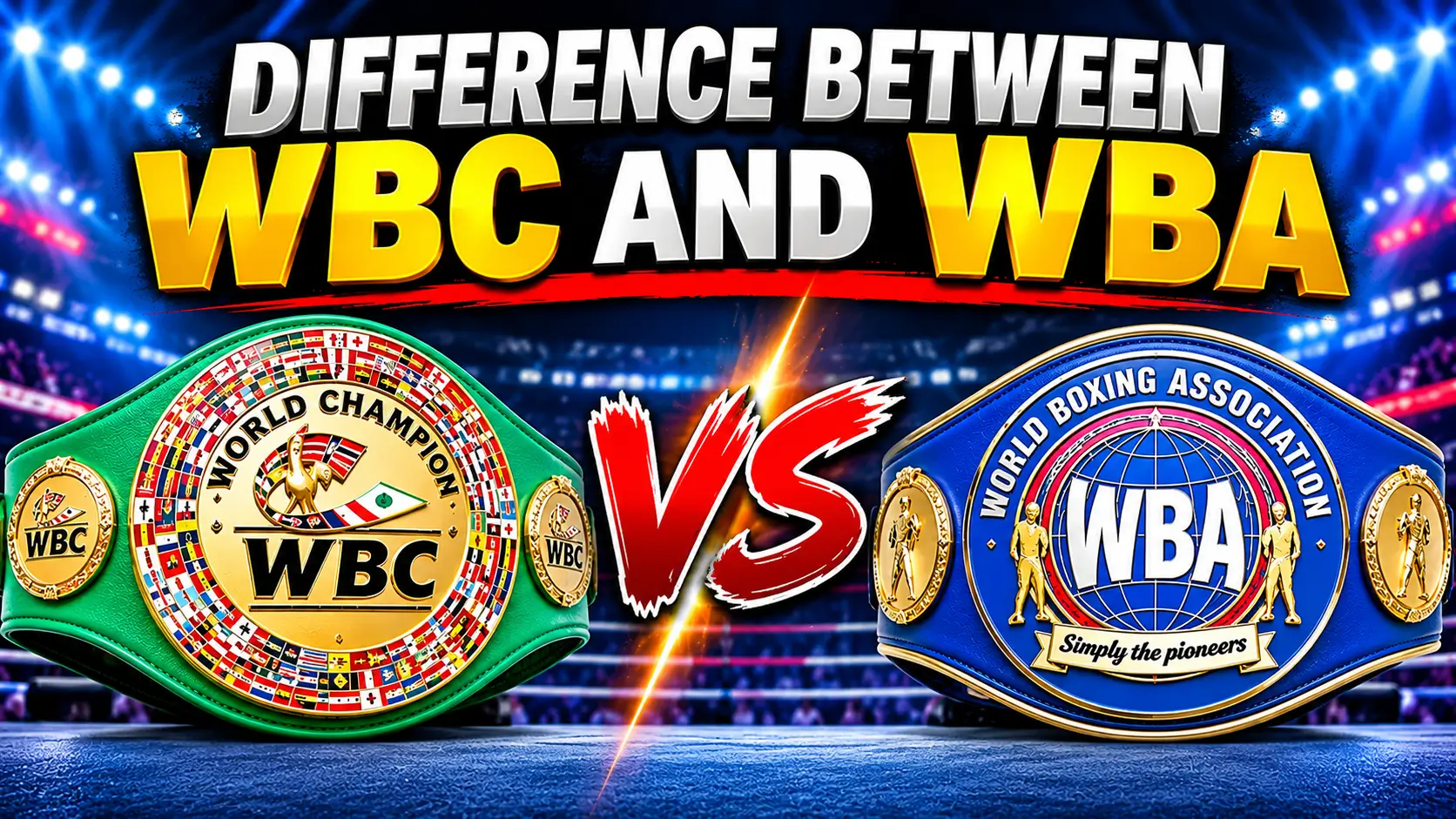
Boxing fans often compare the IBF Championship belt to its three major rivals. If you’re curious how the WBC’s iconic green-and-gold design or the WBA’s more complex, multi-tiered champion system stack up against the IBF’s stricter, single-champion approach, our complete history of WBC Championship belts and our complete guide to the WBA Championship belt cover both in full detail.
Explore our full collection of authentic-style IBF Championship replica belts, crafted with gold-plated brass plates and genuine leather straps, capturing the prestige of one of boxing’s most respected titles.
The International Boxing Federation was founded in 1977 as a regional body, gaining major recognition in 1983 after splitting from the WBA.
A group of officials who failed to win the WBA presidency broke away in 1983, frustrated with the organization’s politics, and founded the IBF with stricter ranking rules and mandatory challenger requirements.
The original design featured a simple red leather strap with gold-plated plates, the IBF logo on the center plate, and “International Boxing Federation” text on the side plates.
The IBF currently sanctions champions across 17 weight divisions, ranging from mini flyweight to heavyweight.
The IBF Championship belt’s story is one of boxing politics turned into genuine credibility, born from a 1983 split with the WBA and built on a founding promise of stricter, more transparent competition. From its simple original design to today’s elaborate, diamond-detailed centerpiece, the belt has been carried by legends like Bernard Hopkins, Wladimir Klitschko, and Manny Pacquiao, cementing its reputation as one of the most respected titles a fighter can earn in the sport.

 Optimized by Seraphinite Accelerator